
A token’s name and logo can look legitimate even when its contract is designed to trap buyers. If you’re searching for how to check if a token is a scam, start with the detail scammers can’t copy: the genuine contract address. Verify it on the correct network before connecting a wallet, buying, or approving anything.
Token pages, social posts, and scanner results can disagree. A single score can’t settle the question, and a token that lets you buy may still block you from selling. Use this checklist to verify the token’s identity, inspect contract behavior, and weigh warning signs before interacting.
Check the address against the project’s official channels, then look for honeypot behavior, unusual buy or sell taxes, weak liquidity locks, and concentrated holder balances. AIDYOR’s Token Scanner adds a risk check using real-time blockchain data across nine supported networks, with no wallet connection or sign-up required. Treat its score as one signal, not a safety guarantee. If the address doesn’t match, selling looks restricted, or key details remain unclear, pause before putting funds or wallet permissions at risk.
Key Takeaways
- Start with the token’s exact contract address and network. A matching name or ticker isn’t enough to confirm its identity.
- Review owner permissions, upgradeability, and trading restrictions. Treat each finding as a risk signal that needs context.
- Compare liquidity, holder concentration, and independent risk scores. No single signal proves a token is safe or fraudulent.
- Use a step-by-step process for how to check if a token is a scam. Stop if the address, contract controls, or available evidence don’t add up.
- Use AIDYOR’s scanner as an additional check. It analyses real-time blockchain data with 7+ security APIs across nine supported networks.
How to Check If a Token Is a Scam: Start With Its Identity
Verify the exact asset and blockchain network first. Don’t weigh a token’s popularity, price movement, or scanner score until you know which contract those signals refer to. A familiar name can belong to several unrelated assets, and a copied logo proves nothing.
Build an identity record before checking anything else:
- Write down the token’s full name as the project presents it.
- Record the ticker, but treat it as a label, not proof of identity.
- Identify the exact network, such as Ethereum or Base.
- Copy the contract address from an established official project channel.
A token contract address is the on-chain identifier for a token’s deployment on a specific network. Matching it confirms you’re inspecting the intended asset, not just a lookalike name. Keep the network and address together. The same token name, or even a similar-looking address, can lead to a different contract.
Match the token address to the correct network
Open a blockchain explorer for the network the project claims to use. Paste the contract address into its search field, then compare the explorer’s address with your copied source character by character. Check the beginning and end, but don’t stop there. One altered character can point to another contract.
Confirm that the explorer page identifies a token contract on the selected chain. A correct-looking name or logo is not authentication: scammers can copy both. The broader cryptocurrency scam landscape includes impersonation tactics, so treat branding as a claim to verify, not evidence of legitimacy.
Separate project claims from verifiable facts
Compare the project’s claims with what you can verify on-chain. Does its official site name the same network? Does the address it publishes lead to the contract you’re examining? Do token pages and announcements point to one consistent asset? Anonymous endorsements and reposted claims are weak evidence. They don’t establish who controls a project or whether an address is genuine.
Stop if sources disagree. For example, if a project’s site names Base but its pinned social post links to an address on another network, don’t guess which source is right. Don’t connect a wallet or interact until the mismatch is resolved. Apply the same rule if a search result, token listing, or community post presents a different address. When learning how to check if a token is a scam, treat identity as the first gate: unresolved conflicts mean the asset hasn’t passed it.
Save the verified name, ticker, network, and address as one reference set. Use it for every later check. If one detail changes, pause and verify the new information through established project channels before proceeding.
Inspect the Token Contract for Risk Signals Without Overreading Them
Once you’ve identified the contract, inspect what its code and permissions allow. A token may include controls that affect transfers, fees, or future behavior. Those controls can create real risks, but their presence alone doesn’t prove the team intends to misuse them. Ask what each control can do, who can use it, and whether that power is active.
An automated contract scan identifies risk signals in the code and on-chain data; it cannot guarantee that a token is safe. Treat scan results as leads, not a final verdict. Unverified code can limit what a scanner or explorer reveals, so don’t assume a clean-looking result means every behavior is understood.
Review privileged controls and changeability
Look for owner-only functions and upgrade permissions. Depending on the contract design, these may let an authorized account change settings, alter transaction rules, or replace contract logic. This flexibility can support legitimate maintenance, but it also means token behavior may not be fixed.
Check whether powerful permissions remain active, have been renounced, or are limited by a multisignature wallet or another control mechanism. Then consider what each permission allows. An owner role with narrowly defined administrative functions has a different risk profile from one that can change fees without a clear limit. Don’t label either case a scam based on the role name alone. If you can’t determine the scope or who controls it, mark it unresolved and pause.
Treat sell restrictions and taxes as separate checks
Look for functions or settings that affect who can transfer or sell, including allowlists, blocklists, transaction limits, and adjustable fees. A restriction may have a stated purpose, but unexplained controls or rules that can change without warning deserve scrutiny. Compare what the contract permits with what the project claims. A mismatch calls for investigation, not guesswork.
Keep the first review focused. A token that appears buyable may still restrict selling, and transfer taxes can change the amount a seller receives. These are separate contract-behavior risks. For a deeper investigation, follow dedicated explainers on honeypot detection and token buy-and-sell taxes rather than treating this initial review as a full test.
If you’re unsure how to check if a token is a scam, record each finding, its possible impact, and what remains unknown. Don’t connect a wallet or approve a transaction just to clarify contract behavior. A risk scanner can add another data point without requiring you to interact with the token. For example, AIDYOR’s Token Scanner analyses real-time blockchain data. Use its results alongside your contract review, not in place of judgment. Stop if a critical permission is unexplained, trading rules conflict with project claims, or evidence remains contradictory.
Cross-Check Liquidity, Holders, and Risk Scores Before Drawing a Conclusion
After reviewing the contract, compare it with market and ownership signals. These indicators can show how exposed a token may be to trading disruption or concentrated control, but they don’t reveal intent on their own. No single risk signal establishes that a token is legitimate or a scam.
| Signal | What it may indicate | What it cannot prove |
|---|---|---|
| Liquidity | How much trading activity the pool may absorb before price movement becomes severe. | That buyers can always sell, or that liquidity will remain available. |
| Holder concentration | Whether a small number of wallets may have outsized influence or create sell pressure. | That a large holder plans to sell or control the project. |
| Risk score | How a tool weighs detected signals using its data and method. | That the token is safe or fraudulent. |
Read liquidity and holder distribution as context
Liquidity affects how easily trades may execute. A thin pool can mean even a modest trade moves the price sharply, or that selling becomes difficult under certain conditions. A liquidity lock provides context about access to pool assets, but its duration and terms matter. Don’t treat a lock as proof that the token is safe.
Check holder distribution too. A single wallet holding more than 10% of supply, excluding known burn addresses or centralized exchange wallets, is a notable risk indicator. That concentration may create sell pressure or give one holder disproportionate influence, but it doesn’t prove the holder will act against other traders. For deeper checks, use dedicated guides to liquidity and holder distribution rather than drawing a verdict from a snapshot.
Interpret a token risk score cautiously
A risk score compresses findings into a number. Its meaning depends on the available data and the tool’s detection methods. A low score can miss behavior the system doesn’t detect; a high score may flag a feature that needs context. Open the underlying findings. Check which contract or market signals drove the result, then compare them with what you’ve verified independently.
AIDYOR’s Token Scanner returns a score from 0 to 100 and analyses real-time blockchain data using 7+ security APIs across nine supported networks. Treat the score as an additional signal, not a verdict. To understand what a crypto token risk score tells you, focus on how the findings support or conflict with your other checks.
When checking whether a token is a scam, look for agreement across independent evidence. Thin liquidity, concentrated ownership, or a concerning score should prompt closer review. Conflicting signals call for caution. If you can’t explain a serious risk or reconcile it with the project’s claims, stop before interacting.
Use This Scam-Check Checklist Before You Buy or Interact
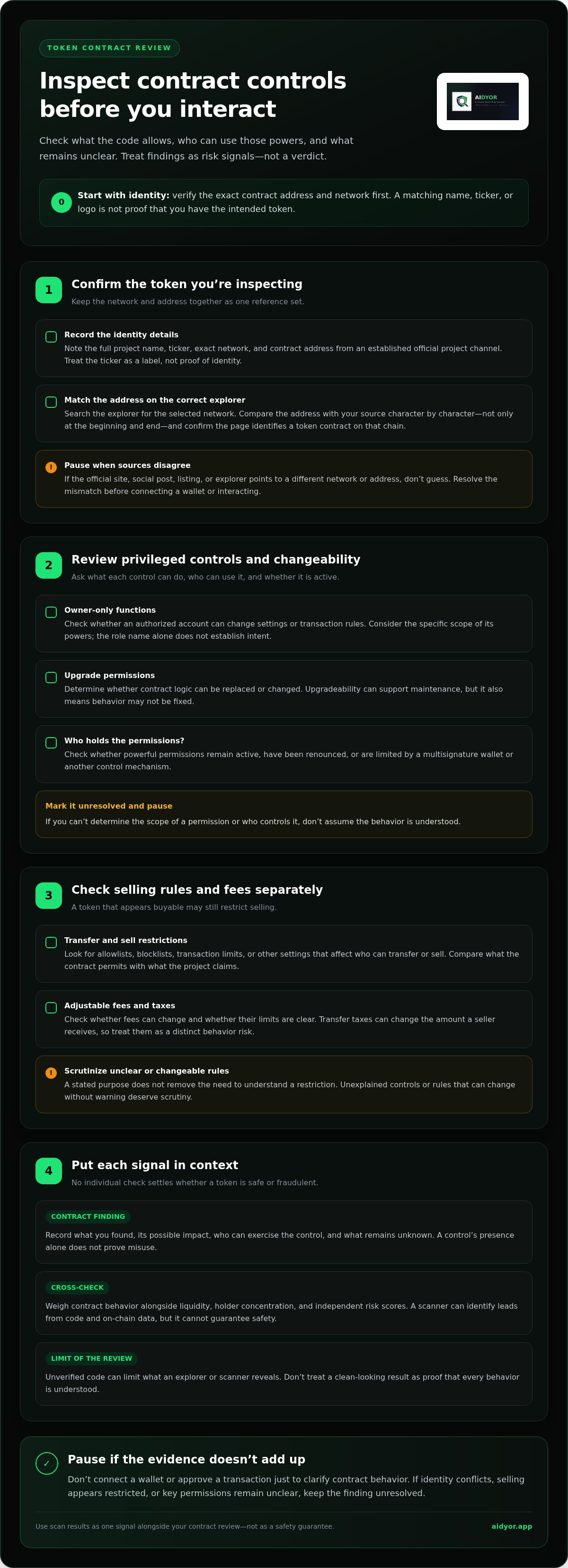
Run the same checks in the same order each time. A repeatable process helps separate verifiable evidence from hype and reduces pressure to rush into a wallet connection or transaction signature. You don’t need to interact with a token to investigate it.
Follow a repeatable pre-interaction sequence
Complete these steps before you buy, connect a wallet, or approve anything. Record unclear findings instead of filling gaps with assumptions.
- Confirm the token’s name, ticker, network, and contract address using established project information.
- Open the address in an explorer for that network. Verify that the contract matches the asset you intend to inspect.
- Review owner permissions and upgrade controls. Note any active powers you can’t explain.
- Check for trading restrictions or unusual transfer rules. Treat unexpected limits as a reason to pause.
- Review liquidity and holder distribution for signs of limited trade capacity or concentrated control.
- Compare independent risk findings with the project’s claims and the on-chain evidence.
- Write down contradictions and unanswered questions. Resolve them before deciding whether to proceed.
The goal isn’t to collect the most signals. It’s to see whether the evidence agrees. A scanner result may add useful context, but it doesn’t replace checking the contract and the information behind the score. Don’t let a confident project post outweigh conflicting on-chain details.
Know when to stop and protect your wallet
Stop if the address or network doesn’t match, a powerful contract control remains unexplained, or project claims conflict with what you can verify. Don’t connect a wallet or sign an unfamiliar transaction to test whether a token, website, or support account is trustworthy. A signature can authorize an action, not simply confirm that you’ve read a page.
Unresolved risk means pause. It doesn’t force a buy-or-sell verdict. If you’ve already interacted with a suspicious contract, don’t approve further transactions while assessing what happened. Seek reputable incident-response guidance and use your wallet’s own permission controls carefully. Never follow urgent messages from unsolicited accounts claiming they can recover funds.
For another pre-interaction signal, run the contract through AIDYOR’s Token Scanner. It analyses real-time blockchain data using 7+ security APIs across nine supported networks, without requiring a wallet connection or sign-up. Treat its score as one input, not clearance to proceed. If key evidence still doesn’t add up, wait.
Use AIDYOR as an Additional Token Scam Check
A scan is most useful after you’ve identified the token and gathered other evidence. It adds another view of current blockchain data, but doesn’t replace checking the contract, permissions, liquidity, or holder distribution. Keep the verified network and contract address in front of you so you assess the intended asset, not a lookalike.
AIDYOR’s Token Scanner analyses real-time blockchain data using 7+ security APIs across nine supported networks: Ethereum, BNB Chain, Solana, Polygon, Arbitrum, Base, Avalanche, Fantom, and Robinhood Chain. It returns a score from 0 to 100. You can scan without connecting a wallet or signing up.
Run a scan without connecting a wallet
Select the relevant network and enter the token details the scanner requests. Compare the result with your notes. A scan of the wrong contract or chain won’t answer questions about the asset you intend to investigate. If the token isn’t on a supported network, don’t substitute a similarly named asset or assume the result applies.
Review the score and reported risk signals as evidence to examine, not instructions to buy or sell. The scan doesn’t require you to approve a transaction. It also doesn’t replace independent research. Keep wallet prompts out of the inspection process. A token check shouldn’t require you to grant a contract permission to move assets.
Turn scan findings into a cautious decision
Open the findings behind the score and ask what each one means for this token. Compare flagged contract risks with the contract’s permissions and trading behavior. Compare market-related findings with the liquidity and holder information you reviewed. If the scanner and your other sources disagree, investigate the discrepancy. Don’t dismiss it because one result looks reassuring.
A low score is not proof of safety. The scanner can only assess signals available to its methods and data. A high score also needs context: identify the flagged issue and compare it with other evidence. If you can’t explain an important finding, or the token’s identity remains uncertain, pause. No scanner can remove the need for judgment.
Use the result as one part of a broader decision process. Keep identity, contract behavior, market conditions, and independent signals in view together. If the evidence still conflicts, don’t interact until you understand why.
Run an additional check before connecting a wallet or transacting: scan the token with AIDYOR, then review its findings alongside your own research.
Make Caution Your Default Before the Next Click
The next token will arrive with its own story, urgency, and claims of upside. Slow the decision down. Treat unanswered questions as a reason to wait, not a challenge to overcome. Knowing how to check if a token is a scam means keeping control of your next step, even when the evidence is incomplete.
For an additional data point, AIDYOR’s Token Scanner analyses real-time blockchain data using 7+ security APIs across Ethereum, BNB Chain, Solana, Polygon, Arbitrum, Base, Avalanche, Fantom, and Robinhood Chain. You can use it without connecting a wallet or signing up. Review the findings alongside your own checks. A scan is not a guarantee of safety.
Scan a token with AIDYOR before you interact. Trust verified evidence over pressure, and give yourself permission to walk away when the risks don’t add up.
Frequently Asked Questions
Is there a guaranteed way to know whether a token is a scam?
No single check can guarantee that a token is safe or fraudulent. Combine contract and network verification with contract and market evidence from independent sources. Automated tools can surface warning signs, but they can’t establish intent or predict every future change. For example, active upgrade permissions may allow a contract to be altered after an initial check. If important facts conflict or remain unclear, pause instead of treating uncertainty as approval.
Can a legitimate token still have high-risk signals?
Yes. Concentrated ownership, limited liquidity, or powerful administrative controls can appear in a legitimate project, but they still affect your exposure. Ask what a signal enables and whether the project’s explanation matches observable evidence. For example, a stated maintenance role should have a clearly understandable scope. Don’t dismiss a warning because a project has a large community or established branding. Popularity doesn’t explain away contract permissions or market risk.
How can I tell whether a token contract address is real?
Find the address through established project channels and compare it with the contract shown in an explorer for the correct network. Check every character, not just the first and last few. A copied name, ticker, or logo can point to a different asset. If project pages give conflicting addresses or networks, don’t choose one by guesswork. A matching address identifies the contract you’re checking, but it doesn’t establish that the token is safe.
Does a low token risk score mean the token is safe?
No. A low score means the scanner detected fewer or lower-severity signals within its analysis, not that the token is guaranteed safe or sellable. Review the findings and consider what data the tool may not capture. For example, a score can’t predict a future change to contract permissions. Confirm the asset independently and treat the score as one input, not the final decision.
Should I connect my wallet to check whether a token is a scam?
No. You can complete many initial checks without connecting a wallet. Use public contract and market information, or a scanner that works without wallet access. Never connect to an unfamiliar site or sign a transaction just to view token details. If a page says you must approve a transaction to reveal basic information, leave it and verify the site through a trusted source.
What should I do if I already bought a suspicious token?
Don’t rush into another transaction or trust a stranger promising to recover your funds. Record the token address, network, and relevant transaction details while they’re available. Avoid unfamiliar approvals. If you suspect your wallet has been exposed, use trusted wallet-security guidance to review permissions and protect remaining assets. Never share your recovery phrase or private keys. People who have already lost funds may be targeted by follow-up recovery scams.
Can a token scanner detect every scam token?
No. A scanner can only assess available data and indicators its methods recognize. New contracts, changing permissions, incomplete information, or deceptive project claims may limit what appears in a result. Treat a scan as a way to decide what to investigate next. Confirm that you’re checking the intended asset, examine relevant findings, and compare them with independent evidence before connecting a wallet or signing anything.
